Buy bpositive.eu ?
We are moving the project
bpositive.eu .
Are you interested in purchasing the domain
bpositive.eu ?
domain@kv-gmbh.de · 0541-91531010
Buy bpositive.eu ?
What remains in the test tube?
In the test tube, there will be a mixture of the reactants and products of the chemical reaction that took place. Depending on the specific reaction, there may be some unreacted starting materials, as well as any new compounds formed during the reaction. The test tube may also contain byproducts or impurities depending on the reaction conditions. Overall, the contents of the test tube will reflect the outcome of the chemical reaction that occurred. **
How is a test tube silvered?
A test tube can be silvered using a process called silvering or silver mirror reaction. First, the inside of the test tube is cleaned and dried thoroughly. Then, a solution of silver nitrate and ammonia is added to the test tube, followed by a reducing agent such as glucose or formaldehyde. This causes the silver ions to be reduced and deposited onto the inside surface of the test tube, creating a thin layer of silver. The test tube is then rinsed and dried, resulting in a silvered interior. **

Similar search terms for Test tube
Top-Angebote
Products related to Test tube:
-
Storied Home "Bamboo Test Tube Rack - 9.88""L x 2.5""W x 7.88""H"Showcasing artisan craftsmanship and natural beauty, this bamboo rack with 6 glass test tubes is perfect for propagating plants . Its slim profile and warm tones make it a striking centerpiece or charming accent for shelves, tables, or entryways.43,49 $*Shipping: 0,00 $Secure redirect to the provider
-
Inspire Picks Mini Bubble Stick Toy For Kids Portable Test Tube Bubble Blower With Bubble Water10cm 10pcs Color RandomBring simple summer joy wherever you go with this adorable mini bubble blowing toy made for endless outdoor fun. Compact and lightweight, this test tubestyle bubble stick is perfectly sized for little hands and easy to carry in pockets or bags. Just...34,93 $*Shipping: 0,00 $Secure redirect to the provider
-
Care+ HIV rapid test (1 test)Professional rapid test for the detection of HIV-1/HIV-2 antibodies, to aid in the diagnosis of HIV infection. For use only by healthcare professionals and authorised organisations.What is the test for?The HIV rapid test is a visual immunoassay for the qualitative detection of antibodies to HIV-1 and HIV-2 in human whole blood, serum or plasma. It aids in the diagnosis of HIV infection.It is estimated that 200–300 new HIV infections are registered in Hungary each year, and the number of undiagnosed cases is significant. Early detection is key, which is why regular screening is important. It takes time for antibodies to develop after infection (the window period), so an antibody test may still give a negative result in the case of a recent infection.Professional use and sales restrictionsThis is not a home self-test. The product may only be used by trained healthcare professionals (for example, in a medical practice, clinic or screening centre). The manufacturer and distributor accept no responsibility for use for self-testing.Under Decree 2/2008 (I. 8.) of the Ministry of Health, HIV rapid tests may only be stocked in institutional pharmacies, for use in inpatient care. The product may be purchased by healthcare institutions, doctors and organisations authorised to provide AIDS screening.Contents1 test cassette1 disposable pipetteBuffer solution1 finger-prick lancet1 alcohol wipeHungarian-language instructions for useProduct featuresPack size: 1Type: in vitro diagnostic (IVD) cassette rapid testAnalyte detected: antibodies to HIV-1 and HIV-2Sample: whole blood (including finger-prick blood), serum or plasmaResult: read after 10 minutes; cannot be interpreted after 20 minutesUse: professionalManufacturer: Assure Tech. (Hangzhou) Co., Ltd., ChinaAccuracy (manufacturer’s data)Diagnostic sensitivity: more than 99% (95% confidence interval: 99.4–100.0%), based on testing 602 HIV-positive samplesTest procedure (for professionals)Bring the test and sample to room temperature (15–30 °C) before use. Once the pouch has been opened, perform the test within one hour.For whole blood, add 2 drops (approx. 50 µl) of blood to the sample well (S), then add 1 drop of buffer.For serum or plasma, use 1 drop of sample and 1 drop of buffer.Read the result after 10 minutes. The result cannot be interpreted after 20 minutes.Interpreting the resultPositive: two lines appear, in the control (C) and test (T) regions.Negative: only the control (C) line appears.Invalid: the control (C) line does not appear. Repeat the test using a new test device.Important information:For use by healthcare professionals only; not suitable for self-testingIn the case of a recent infection, the test may still be negative because of the window periodA positive result must be confirmed by a medical confirmatory testBlood, samples and used equipment must be treated as potentially infectiousSingle-use in vitro diagnostic (IVD) rapid testRead the accompanying Hungarian-language instructions for use...22,23 £*Shipping: 6,10 £Secure redirect to the provider
-
Inspire Picks 2PCS Multimeter Test Clips Red & Black Alligator Clip Test Lead Accessories 2PCS Multimeter Test Clips Red & Black Alligator Clip Test Lead AccessoriesMake electrical testing safer and more convenient with these multimeter test clips. Designed for use with compatible multimeters and testing equipment, these durable red and black clips provide a secure connection for handsfree measurements. Ideal...34,93 $*Shipping: 0,00 $Secure redirect to the provider




-
How do you heat a test tube?
To heat a test tube, you can use a Bunsen burner or a hot plate. If using a Bunsen burner, adjust the flame to a blue, non-luminous flame and hold the test tube at an angle in the flame, rotating it to ensure even heating. If using a hot plate, place the test tube on the hot plate and adjust the temperature to the desired level. Always use heat-resistant gloves or tongs to handle the test tube to avoid burns. **
-
Why did the tube of the tube amplifier glow blue?
The tube of a tube amplifier glows blue due to a phenomenon called cathodoluminescence. This occurs when electrons within the tube collide with the atoms of the tube's material, causing them to emit light. The blue glow is a byproduct of this process and is a characteristic feature of tube amplifiers. It does not affect the performance of the amplifier but is rather a visual indicator of the electron activity within the tube. **
-
How much does a test tube cost 1700?
The cost of a test tube can vary depending on the brand, quality, and quantity purchased. On average, a single test tube can cost around $0.10 to $1.00. Therefore, purchasing 1700 test tubes at this price range could cost anywhere from $170 to $1700. **
-
How do I test a neon tube starter?
To test a neon tube starter, you will need a multimeter. First, make sure the power to the neon tube is turned off. Then, remove the starter from the fixture and set your multimeter to the continuity setting. Place the multimeter probes on the two contacts of the starter and check for continuity. If there is no continuity, the starter is likely faulty and needs to be replaced. If there is continuity, the starter is functioning properly. **

Why do ants stay in the test tube?
Ants stay in the test tube because it provides a safe and controlled environment for them to establish their colony. The test tube mimics the narrow, enclosed spaces that ants naturally seek out for nesting. It also helps to regulate temperature and humidity, creating optimal conditions for the ants to thrive and reproduce. Additionally, the test tube allows for easy observation and maintenance of the colony by researchers or ant keepers. **
How can one test a neon tube or fluorescent tube with a measuring device themselves?
To test a neon tube or fluorescent tube, one can use a multimeter set to measure resistance or continuity. First, ensure the tube is disconnected from the power source. Then, touch one probe of the multimeter to one end of the tube and the other probe to the other end. If the multimeter shows a reading, it indicates that the tube is functioning properly. If there is no reading, it suggests that the tube is faulty and needs to be replaced. **
Top-Angebote
Products related to Test tube:
-
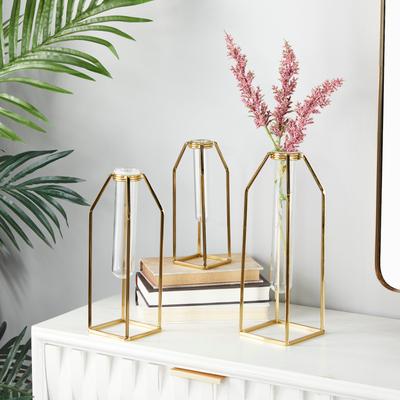
CosmoLiving by Cosmopolitan Gold Stainless Steel Metal Test Tube Decorative Vase (Set of 3)Display some freshly cut flowers with these hanging apothecary tube vases to give your tabletops a whimsical and refreshing vibe. This item ships in 1 carton.66,95 $*Shipping: 0,00 $Secure redirect to the provider
-
Storied Home "Bamboo Test Tube Rack - 9.88""L x 2.5""W x 7.88""H"Showcasing artisan craftsmanship and natural beauty, this bamboo rack with 6 glass test tubes is perfect for propagating plants . Its slim profile and warm tones make it a striking centerpiece or charming accent for shelves, tables, or entryways.43,49 $*Shipping: 0,00 $Secure redirect to the provider
-
Inspire Picks Mini Bubble Stick Toy For Kids Portable Test Tube Bubble Blower With Bubble Water10cm 10pcs Color RandomBring simple summer joy wherever you go with this adorable mini bubble blowing toy made for endless outdoor fun. Compact and lightweight, this test tubestyle bubble stick is perfectly sized for little hands and easy to carry in pockets or bags. Just...34,93 $*Shipping: 0,00 $Secure redirect to the provider
-
What remains in the test tube?
In the test tube, there will be a mixture of the reactants and products of the chemical reaction that took place. Depending on the specific reaction, there may be some unreacted starting materials, as well as any new compounds formed during the reaction. The test tube may also contain byproducts or impurities depending on the reaction conditions. Overall, the contents of the test tube will reflect the outcome of the chemical reaction that occurred. **
-
How is a test tube silvered?
A test tube can be silvered using a process called silvering or silver mirror reaction. First, the inside of the test tube is cleaned and dried thoroughly. Then, a solution of silver nitrate and ammonia is added to the test tube, followed by a reducing agent such as glucose or formaldehyde. This causes the silver ions to be reduced and deposited onto the inside surface of the test tube, creating a thin layer of silver. The test tube is then rinsed and dried, resulting in a silvered interior. **
-
How do you heat a test tube?
To heat a test tube, you can use a Bunsen burner or a hot plate. If using a Bunsen burner, adjust the flame to a blue, non-luminous flame and hold the test tube at an angle in the flame, rotating it to ensure even heating. If using a hot plate, place the test tube on the hot plate and adjust the temperature to the desired level. Always use heat-resistant gloves or tongs to handle the test tube to avoid burns. **
-
Why did the tube of the tube amplifier glow blue?
The tube of a tube amplifier glows blue due to a phenomenon called cathodoluminescence. This occurs when electrons within the tube collide with the atoms of the tube's material, causing them to emit light. The blue glow is a byproduct of this process and is a characteristic feature of tube amplifiers. It does not affect the performance of the amplifier but is rather a visual indicator of the electron activity within the tube. **
Similar search terms for Test tube
-
Care+ HIV rapid test (1 test)Professional rapid test for the detection of HIV-1/HIV-2 antibodies, to aid in the diagnosis of HIV infection. For use only by healthcare professionals and authorised organisations.What is the test for?The HIV rapid test is a visual immunoassay for the qualitative detection of antibodies to HIV-1 and HIV-2 in human whole blood, serum or plasma. It aids in the diagnosis of HIV infection.It is estimated that 200–300 new HIV infections are registered in Hungary each year, and the number of undiagnosed cases is significant. Early detection is key, which is why regular screening is important. It takes time for antibodies to develop after infection (the window period), so an antibody test may still give a negative result in the case of a recent infection.Professional use and sales restrictionsThis is not a home self-test. The product may only be used by trained healthcare professionals (for example, in a medical practice, clinic or screening centre). The manufacturer and distributor accept no responsibility for use for self-testing.Under Decree 2/2008 (I. 8.) of the Ministry of Health, HIV rapid tests may only be stocked in institutional pharmacies, for use in inpatient care. The product may be purchased by healthcare institutions, doctors and organisations authorised to provide AIDS screening.Contents1 test cassette1 disposable pipetteBuffer solution1 finger-prick lancet1 alcohol wipeHungarian-language instructions for useProduct featuresPack size: 1Type: in vitro diagnostic (IVD) cassette rapid testAnalyte detected: antibodies to HIV-1 and HIV-2Sample: whole blood (including finger-prick blood), serum or plasmaResult: read after 10 minutes; cannot be interpreted after 20 minutesUse: professionalManufacturer: Assure Tech. (Hangzhou) Co., Ltd., ChinaAccuracy (manufacturer’s data)Diagnostic sensitivity: more than 99% (95% confidence interval: 99.4–100.0%), based on testing 602 HIV-positive samplesTest procedure (for professionals)Bring the test and sample to room temperature (15–30 °C) before use. Once the pouch has been opened, perform the test within one hour.For whole blood, add 2 drops (approx. 50 µl) of blood to the sample well (S), then add 1 drop of buffer.For serum or plasma, use 1 drop of sample and 1 drop of buffer.Read the result after 10 minutes. The result cannot be interpreted after 20 minutes.Interpreting the resultPositive: two lines appear, in the control (C) and test (T) regions.Negative: only the control (C) line appears.Invalid: the control (C) line does not appear. Repeat the test using a new test device.Important information:For use by healthcare professionals only; not suitable for self-testingIn the case of a recent infection, the test may still be negative because of the window periodA positive result must be confirmed by a medical confirmatory testBlood, samples and used equipment must be treated as potentially infectiousSingle-use in vitro diagnostic (IVD) rapid testRead the accompanying Hungarian-language instructions for use...22,23 £*Shipping: 6,10 £Secure redirect to the provider
-
Inspire Picks 2PCS Multimeter Test Clips Red & Black Alligator Clip Test Lead Accessories 2PCS Multimeter Test Clips Red & Black Alligator Clip Test Lead AccessoriesMake electrical testing safer and more convenient with these multimeter test clips. Designed for use with compatible multimeters and testing equipment, these durable red and black clips provide a secure connection for handsfree measurements. Ideal...34,93 $*Shipping: 0,00 $Secure redirect to the provider
-
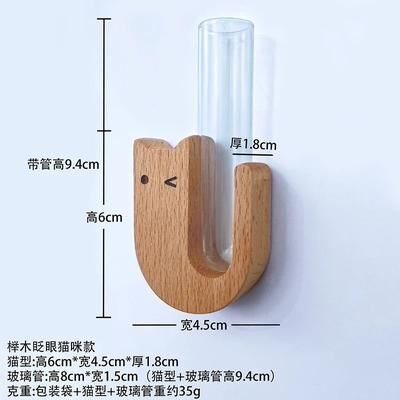
Uplifted Finds Cat Whisker Storage Jar High Performance Wooden Test Tube Vase & Pet Hair Keepsake Magnet a4 Beech WoodCommand ultimate memorial confidence with this Cat Whisker Storage Jar, a highperformance preservation solution specifically engineered to act as a comprehensive tool for elite pet keepsake organization and superior technical aesthetics. Built with...41,97 $*Shipping: 0,00 $Secure redirect to the provider
-
Inspire Picks Mini Bubble Stick Toy For Kids Portable Test Tube Bubble Blower With Bubble Water10cm 20pcs Color RandomBring simple summer joy wherever you go with this adorable mini bubble blowing toy made for endless outdoor fun. Compact and lightweight, this test tubestyle bubble stick is perfectly sized for little hands and easy to carry in pockets or bags. Just...34,93 $*Shipping: 0,00 $Secure redirect to the provider
-
How much does a test tube cost 1700?
The cost of a test tube can vary depending on the brand, quality, and quantity purchased. On average, a single test tube can cost around $0.10 to $1.00. Therefore, purchasing 1700 test tubes at this price range could cost anywhere from $170 to $1700. **
-
How do I test a neon tube starter?
To test a neon tube starter, you will need a multimeter. First, make sure the power to the neon tube is turned off. Then, remove the starter from the fixture and set your multimeter to the continuity setting. Place the multimeter probes on the two contacts of the starter and check for continuity. If there is no continuity, the starter is likely faulty and needs to be replaced. If there is continuity, the starter is functioning properly. **
-
Why do ants stay in the test tube?
Ants stay in the test tube because it provides a safe and controlled environment for them to establish their colony. The test tube mimics the narrow, enclosed spaces that ants naturally seek out for nesting. It also helps to regulate temperature and humidity, creating optimal conditions for the ants to thrive and reproduce. Additionally, the test tube allows for easy observation and maintenance of the colony by researchers or ant keepers. **
-
How can one test a neon tube or fluorescent tube with a measuring device themselves?
To test a neon tube or fluorescent tube, one can use a multimeter set to measure resistance or continuity. First, ensure the tube is disconnected from the power source. Then, touch one probe of the multimeter to one end of the tube and the other probe to the other end. If the multimeter shows a reading, it indicates that the tube is functioning properly. If there is no reading, it suggests that the tube is faulty and needs to be replaced. **
* All prices are inclusive of VAT and, if applicable, plus shipping costs. The offer information is based on the details provided by the respective shop and is updated through automated processes. Real-time updates do not occur, so deviations can occur in individual cases. ** Note: Parts of this content were created by AI.